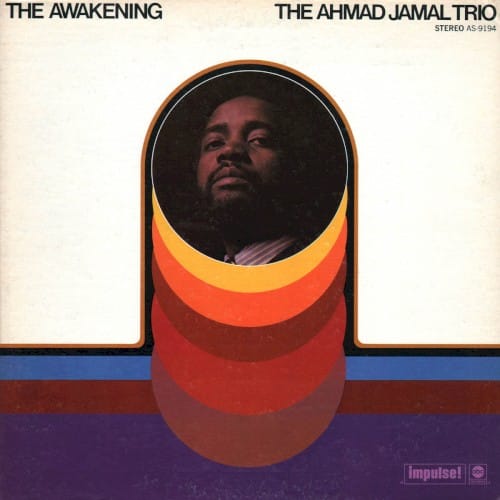
Some albums sound like a conversation you weren't supposed to overhear. The Awakening is more like a man talking to himself in a near-empty room, trying to remember a melody from a dream that’s already slipping away. Ahmad Jamal plays like he’s solving a puzzle in real time, and the puzzle keeps changing shape.
Recorded in 1970, this trio session with Jamil Sulieman on bass and Frank Gant on drums finds Jamal at a moment when his trademark spaciousness had deepened into something almost severe. The silences are just as freighted as the notes. The dramatic pauses feel less like technique and more like instinct — a musician trusting the quiet because he knows what’s coming next.
The title track opens the album with a patient, two-note motif that stretches and contracts across eight minutes. By the time the rhythm section locks in, you’ve already been listening for three minutes without noticing. That’s Jamal’s gift: he makes the architecture of a song feel like breathing.
“Patterns” is the most striking thing here — a left-hand vamp that sounds like a door closing, over which Jamal builds a solo that keeps returning to the same interval, each time with a different weight. It’s not flashy. It’s persistent. The track runs eleven minutes but never drags, because every repetition carries a slightly different intention.
Jamal covers Dorothy Ashby’s “Dolphin Dance” with a reading that emphasizes the tenderness in the harmony. Where others might rush the chord changes, he lets them hang. The bass solo from Sulieman is a small marvel — notes chosen with the same economy Jamal uses, no wasted motion, every phrase a complete thought.
“You’re My Everything” gets a treatment that borders on the cinematic. Gant’s brushwork is so soft you barely hear it as percussion — it’s more like the sound of rain against a window. Jamal plays the melody as if it’s a secret, then opens it into a solo that finds the harmonic tension underneath the prettiness.
I won’t pretend The Awakening was a commercial hit. It wasn’t. By 1970, jazz was chasing fusion, funk, and electric everything. Jamal kept working in acoustic trio format, and this album sounds like a man who knew exactly what he wanted and didn’t care if the room was emptying.
That stubbornness paid off. The album has been rediscovered by successive generations of musicians — hip-hop producers sampled it, pianists studied its touch, and the title track became a quiet standard among those who pay attention to trio playing. It doesn’t announce itself. It doesn’t need to.
Put this on late at night, after the house is still. Let the first track find its way into your ears the way a good conversation finds its way into memory — without announcement, without force, and with the kind of patience that knows where it’s going.