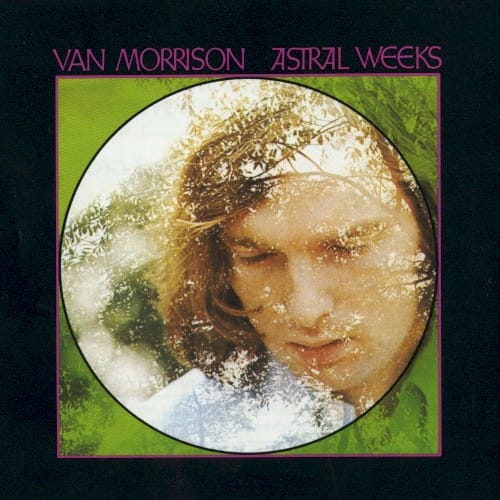
A 25-year-old Irish mystic walked into a New York studio with a guitar and a notebook, and what came out still sounds like it was recorded by people who had just discovered sound. No genre fits it. No other album sounds like it. That's the point.
The first time you hear Astral Weeks, it feels like you’ve walked into a room and the furniture is still rearranging itself around you. Morrison’s voice isn’t singing so much as it is reaching for something through the words — words that don’t quite parse as sentences but land as feelings.
Recorded in two sessions at Century Sound Studios in New York, August and September 1968. The band was assembled by producer Lewis Merenstein. Morrison had never met most of them. Richard Davis on bass, Jay Berliner on guitar, Connie Kay on drums, John Payne on flute, and a string section arranged by Larry Fallon.
Davis later said he thought Morrison was crazy the first time he heard those wordless vocal runs. He kept playing anyway.
The core tracks were largely live — Morrison singing and strumming while the band invented their parts in real time. The strings and woodwinds were overdubbed later, but the room sound never fully left. You can hear the air move on “Madame George.” That’s not reverb. That’s the space between bodies.
I’ve never heard an album that sounds less like it was “made” and more like it was excavated from the air.
“The Way Young Lovers Do” is the closest thing to a pop song here, and even that has a brass chart that sounds like it wandered in from some other dimension. “Sweet Thing” glides on that bassline — Davis playing melody notes where most players would be locking into a root pattern. It’s upright bass played like a lead instrument.
On “Ballerina” Morrison’s voice cracks on the line “your earth is heaven,” and I don’t think it was a choice. It was just what happened.
The album closes with “Slim Slow Slider,” and the band fades out before the song is really done. The last thing you hear is a guitar note decaying into nothing. No resolution. No bow on it. Just the sound of something disappearing.
Merenstein was fired from Warner Bros. shortly after release because nobody knew how to market it. Morrison didn’t tour it. He didn’t play most of these songs live for years. The album sold poorly at first.
It never went away.