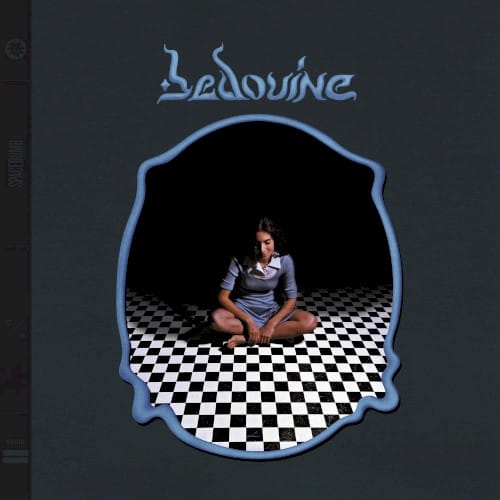
There’s a quiet kind of confidence that only comes from knowing exactly what you’re not going to say. Bedouine’s self-titled debut doesn’t demand your attention. It earns it.
Azniv Korkejian has a voice that sounds like it has been walked through a few different deserts before it reached this microphone. That’s not geography speaking—that’s tone. The melodies arrive unhurriedly. The arrangements leave room for the air to circulate.
The album opens with “Nice and Quiet,” a song that announces its mission in its title. Korkejian’s guitar work is minimal, deliberate. Every note is a choice. The vocal sits somewhere between a whisper and a sigh, and you lean in because leaning in is the only way to catch it.
What marks this record is its restraint. The bass doesn’t thump, it pulses. The strings don’t swell, they hover. “Heart Take Heart” builds but never overreaches. It trusts that the listener will meet the song where it stands.
“Dusty Eyes” contains the line “I was born with a dusty heart / But I keep it clean.” That is the thesis. The whole album is about making do with what you were given, polishing it until it catches the light. Korkejian sings like someone who has found peace with the things she cannot change.
There are moments of levity. “One of These Days” has a bounce to its step, a gentle optimism. But the dominant mood is one of soft melancholy, the kind that doesn’t feel sorry for itself.
Bedouine is an album of folk songs that don’t follow the standard map. The chord progression in “Solitary Daughter” wanders where you don’t expect it. The vocal melody in “You Kill Me” climbs stairs that aren’t there. These songs are structures built from intuition rather than rules.
What makes the album work is that Korkejian never reaches for a big moment. She trusts that small truths, delivered plainly, can be enough. And they are.