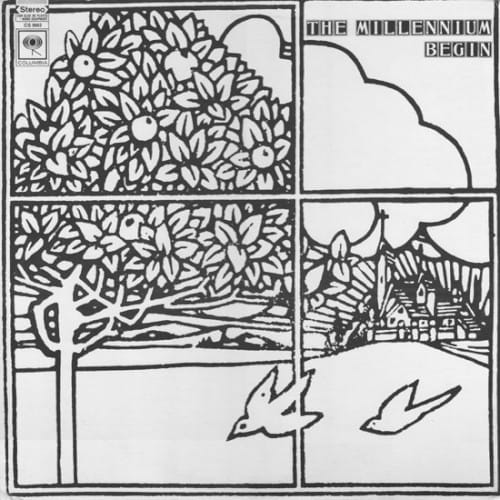
Begin is a pristine, baroque pop artifact from 1968, assembled by producer Curt Boettcher with a dream team of California session musicians. It’s lush, intricate, and heartbreakingly brief — the only album by a group that never played a live show. Essential for anyone who thinks the Beach Boys cornered the market on vocal harmonies.
In 1968, a group of Los Angeles session musicians who had never toured together released one of the most breathtaking records of the decade. They called themselves The Millennium, but they were really Curt Boettcher’s vision made flesh: a nine-person vocal and instrumental collective that spent six months layering harmonies, strings, and woodwinds at Columbia Studios and Sunset Sound. The result was Begin.
Boettcher had already made his name with the Association and the Goldebriars, but here he wanted something denser. He pulled in Lee Mallory, Sandy Salisbury, and others from the city’s session pool — musicians who could sight-read a chart in one take and still hum the hook back to you after lunch.
Keith Olsen, barely into his twenties, engineered the sessions. Years later he’d work with Fleetwood Mac and Whitesnake, but here his work is all warmth and air. The guitars jangle but never clang. The voices stack like stained glass. Listen to “To Claudia on Thursday” — it sounds like six people singing in a cathedral that doesn’t exist.
The band never played a single show. They were a studio construction, assembled for this album and then scattered to the winds. Joe Foster (of the Creation and later backing Boettcher) played drums on several tracks. Ron Edgar handled the rest. The bass was split between Joey Stec and a young Larry Knechtel, who’d later anchor Simon & Garfunkel’s “Bridge Over Troubled Water.”
Everything on Begin is immaculately placed, from the harpsichord on “Prelude” to the wordless chorale that opens the record. It’s the sound of people who knew exactly what they were doing and had the budget to do it right. The strings were arranged by Jimmie Haskell, who worked with everyone from Elvis to the Carpenters. The brass on “It’s You” sounds like a Broadway pit orchestra that wandered into a pop session and decided to stay.
Boettcher mixed the album himself, and the original vinyl pressing on Together Records suffers from a bit of tape hiss and occasional distortion in the loudest passages. That’s not a flaw — it’s a signal. This was made by humans.
The album didn’t sell. Together Records folded shortly after, and the group dissolved without a second thought. But the music leaked out slowly: a few singles, some covers by other artists, then a CD reissue in the 1990s that turned it into a cult item. Today it sits alongside Pet Sounds and Odessa as a monument to what happens when studio professionals stop treating pop as product.
There’s a moment in “I Just Don’t Know How to Say Goodbye” where the background vocals drop out for a single beat before coming back in. That beat — that tiny silence — tells you more about the care involved than any number of overdubs could. Boettcher didn’t fill every space. He knew when to let the air breathe.