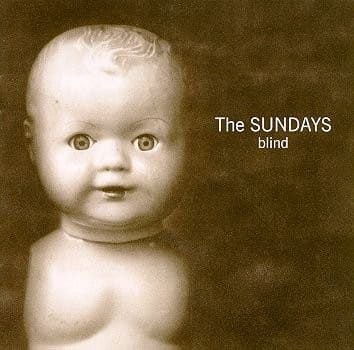
The Sundays' second album is a masterclass in quiet ambition — ten songs that stretch the dream-pop template into something darker and more textured than their beloved debut. If you've only heard "Here's Where the Story Ends," you're missing the real story.
The first time I heard Blind, I was sitting cross‑legged on a carpet that smelled like dust and borrowed time. A friend had brought the CD over because the cover — that inverted window, those hanging leaves — looked like something you’d find in a box of forgotten slides. We put it on, and by the second track, neither of us spoke.
What strikes you first is the space. Harriet Wheeler’s voice doesn’t sit in the mix; it hovers above it, close enough that you can hear her inhale between phrases. David Gavurin’s guitar work on this record is a quiet revelation — where the debut used jangle as punctuation, Blind lets the notes ring into silence. Listen to the opening of “On Earth” and you’ll hear a guitar so clean it could have been strung that morning, each chord decaying naturally into the room’s own air.
The band recorded the album at The Church Studios in London across 1991 and early 1992, working with producer David M. Allen — the same man who’d shaped the sound of The Cure’s The Head on the Door. Allen’s hand is all over the low end: Patrick Hannan’s drums on “Life” have a hollow, wood‑and‑tape thump that no digital plugin has ever matched. Paul Brindley’s bass isn’t heard so much as felt, a warm pressure behind the verses.
What the speakers don’t tell you
The Sundays were famously reluctant. They gave almost no interviews, played very few shows. Blind was their first record after the surprise success of Reading, Writing and Arithmetic, and you can feel the weight of that expectation in every arrangement. The songs are longer, stranger — “A Certain Someone” unfolds like a short story you’ve overheard, Wheeler’s syllables stacking into a private language. The title track closes the album with two chords and a double‑tracked vocal that sounds like she’s arguing with herself.
There’s a moment on “Medicine” where the band drops out for a bar, leaving Wheeler alone with her guitar and the sound of strings shifting against frets. It’s the kind of detail you miss on laptop speakers — the friction of a performance, the thing that separates a record from a document.
I’ll say it plainly: Blind is a better album than the debut. The first one had the songs; this one has the room. You can hear the four of them playing in the same space, bleeding into each other’s microphones. That’s rare in any era, but particularly in 1992, when digital editing was flattening records into identical hours of perfect boredom.
The Sundays never made a bad record. They made three, and then they stopped. But Blind is the one I reach for in the late hours, when the house is quiet and the amp is warm enough to show me where the microphone was placed. It sounds like a secret someone decided to stop keeping.