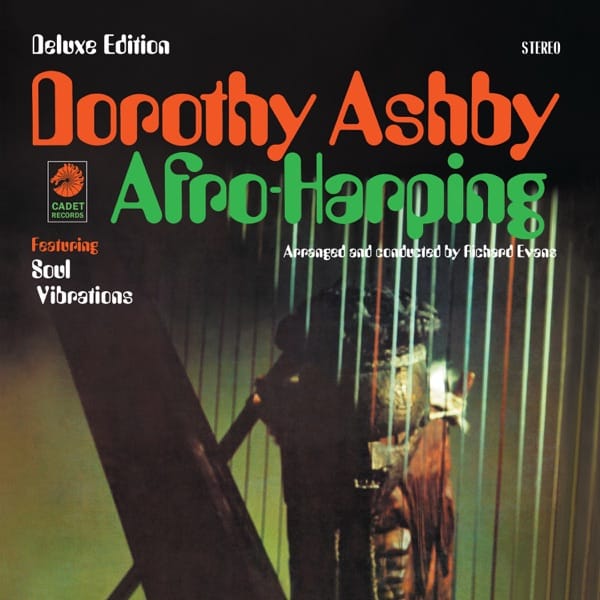
The harp is not supposed to swing.
It is the instrument of angels, of debutante recitals, of the gauzy interlude before the strings come back in. It is not the instrument you call when you want a rhythm section to dig in. Dorothy Ashby heard that assumption and bent a whole career around proving it wrong. Before Afro-Harping, she had already established herself as the rare jazz harpist who could hold her own with bebop lions. This album was something else: a deliberate, joyous leap into the soul and funk that was shaking Chicago in the late sixties.
Richard Evans produced it, and he understood that the harp did not need to be drenched in reverb and treated like a novelty. He placed it right in the pocket, alongside a tight rhythm section that played with Memphis muscle and Detroit snap. The result is an album where the harp is never an oddity. It is the lead voice, yes, but it is also a percussion instrument, a comping instrument, a color that slides between the drums and the horns as if it had always belonged there.
Something New Under the Sun
Listen to “Soul Vibrations.” That bassline is pure 1968 Chicago — melodic, fat, walking with a bounce. The drums hit hard on two and four. Then the harp enters, not with a gentle arpeggio but with a sharp, plucked figure that sounds almost like a guitar. Ashby plays with the attack of a pianist and the phrasing of a horn player. She knows when to lay back and when to step forward. The horn arrangements by Evans frame her without overwhelming her. This is not a gimmick record. It is a record that expands what you think the harp can do.
“Afro-Harping,” the title track, pushes further. There is a bluesy, almost modal quality to the melody. Ashby double-stops like she is playing a twelve-string. The rhythm section locks into a groove that would not be out of place on a late-period James Brown single. But instead of a screeching sax or a shouted vocal, you get the harp singing long, dark lines. It should not work. It works so well that you stop noticing the instrument and start hearing the music.
A Rhythm That Refuses to Sit Still
This album does not break your heart. It moves your feet. Even the slower tracks, like “Lonely Girl,” have a pulse that keeps the head nodding. Ashby’s touch is lighter there, more lyrical, but the band never lets the tempo sag into easy listening. The harp glides over a bed of organ and brushed snares, and for a moment you can hear the jazz roots beneath the soul sheen.
The deep cut is “Games,” a track built on a single, hypnotic guitar riff and a harp line that sounds like it is answering a question nobody asked. It is the kind of song that gets sampled forty years later by a producer looking for something that sounds timeless and strange. That happened, of course. This album became a treasure for crate diggers because Ashby and Evans were not trying to be hip. They were trying to make the harp relevant to a generation that wanted to dance. They succeeded without compromising anything.
Dorothy Ashby died young, in 1986, but she left behind a body of work that refuses to sit in any easy category. Afro-Harping is the most direct argument for her genius. Put it on after midnight, when the house is quiet, and the only rule is that the music has to make you move. This one will.