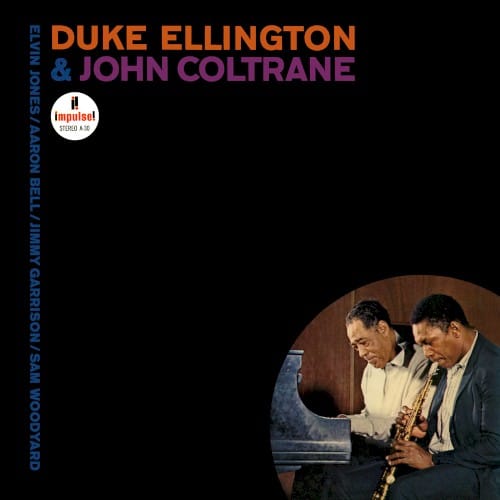
Duke Ellington and John Coltrane recorded together once, in September 1962, creating an unlikely masterpiece that transcended their generational divide. Despite employing rotating rhythm sections and spanning distinct idioms from swing to modal jazz, their mutual respect produced a cohesive album where Coltrane's restraint and Ellington's compositions merged seamlessly. This is essential listening for anyone serious about jazz history—proof that artistic greatness recognizes itself across stylistic borders.
⚡ Quick Answer: Duke Ellington and John Coltrane recorded together in September 1962, creating an unlikely masterpiece that transcended their different musical worlds. Despite using rotating rhythm sections and spanning distinct styles from swing to modal jazz, their mutual respect and genuine delight produced a cohesive album where Coltrane's restraint and Ellington's compositions merged seamlessly, proving that artistic greatness recognizes itself regardless of generational gaps.
There are records that shouldn't work — two giants pulled from different orbits, given a single afternoon in a Manhattan studio — and then there are records that work so completely you stop questioning how.
September 26, 1962. Rudy Van Gelder's studio in Englewood Cliffs, New Jersey. Duke Ellington is 63 years old, the most decorated composer in American music. John Coltrane is 36, in the middle of the most volcanic creative decade any jazz musician has ever produced. Impulse! Records brought them together, and somehow — against the logic of generations, against the gap between big-band formalism and modal exploration — they found each other immediately.
The Session
What makes this record unusual starts with the rhythm section, or rather, the rhythm sections. Neither man's regular drummer was available for the full date, so the album uses three different drummers across its tracks: Elvin Jones (Coltrane's man), Jimmy Cobb, and Sam Woodyard (Ellington's). The bassist is Aaron Bell on some tracks, Jimmy Garrison on others. It sounds like it should create whiplash. Instead it gives the album a slightly different gravity each time the band shifts — like the same room with different weather.
The producer was Bob Thiele, who had a gift for setting up impossible meetings and then getting out of the way. Van Gelder engineered, as he engineered nearly everything that mattered on Impulse! in those years. Van Gelder had an instinct for placement that let you hear the air around Coltrane's tenor — that big, slightly rough-hewn sound he had in '62, before the Interstellar Space years turned it into pure weather.
In the Quiet Parts
The album opens with "In a Mellow Tone," which is as direct an invitation as jazz offers — Ellington's old chestnut from 1940, played at the temperature the title promises. Coltrane doesn't reinvent it. He inhabits it. That restraint is the record's great gift and its great surprise.
"Angelica" is the hidden center of the album for me. It's a ballad written by Ellington specifically for this session, and you can hear him composing toward Coltrane — leaving space in the architecture that Trane fills with long, searching lines. The two of them never seem to be in competition. They seem, genuinely, delighted.
"The Feeling of Jazz" swings in the most old-fashioned sense, and Coltrane swings right back, which he could always do when he chose to — something people forget in the mythology of the sheets-of-sound years.
What's remarkable is what Coltrane doesn't play here. There's no "Giant Steps" harmonic architecture, no modal sprawl, no fire. He comes to Ellington's house and sits down at the table. That's not compromise. That's respect so deep it becomes its own kind of virtuosity.
The whole thing runs under 40 minutes. You'll put it on before bed and find yourself still sitting there when it ends, not quite ready to move.
Further Reading
- Impulse Records in the 1960s: How the House of Fire Burned
- How to Listen to Jazz for Beginners (And Actually Hear It)
- Best Sounding Jazz Albums Ever Recorded: Where to Start
🎵 Key Takeaways
- 🎺 Duke Ellington (63) and John Coltrane (36) recorded together in September 1962 at Rudy Van Gelder's studio, bridging swing formalism and modal jazz in a single afternoon.
- 🥁 The album cycles through three different drummers (Elvin Jones, Jimmy Cobb, Sam Woodyard) and two bassists, yet avoids jarring inconsistency by giving each track distinct harmonic weight instead.
- 🎼 Coltrane's restraint is the album's defining feature—he abandons his sheets-of-sound vocabulary and modal explorations to sit respectfully within Ellington's compositional spaces rather than dominate them.
- 📍 "Angelica," an Ellington ballad written specifically for the session, reveals Ellington composing toward Coltrane's strengths, with the two musicians displaying genuine delight rather than competitive tension.
- ⏱️ The entire album runs under 40 minutes and rewards full, uninterrupted listening—the kind of record that keeps you seated when you intended to play one track before bed.
Further Reading