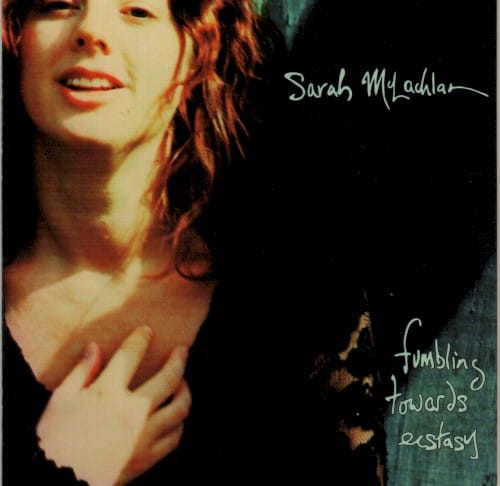
Sarah McLachlan’s 1993 album is the sound of a songwriter learning to trust her own silences. It matters because it turned confessional piano ballads into arena-ready anthems without losing the intimacy. Anyone who thinks “adult alternative” was a dirty word should start here.
The first time I heard “Possession,” I was sitting in a friend’s basement, the CD skip-worn from repeated plays. That opening piano line — a simple descending figure — felt like something you could hold in your hands. McLachlan’s voice came in, not pleading, not showing off, just stating fact. It’s easy to forget now, after three decades of imitators, how radical that restraint sounded in 1993.
The album was recorded primarily at Le Studio in Morin-Heights, Quebec, a facility built into the Laurentian mountains that had previously housed Rush and U2. Producer Pierre Marchand chose it for the isolation — literally, the quiet. The control room ran a Neve 8078 console, and the main tracking room could swallow a grand piano whole. McLachlan used a Yamaha C7, and you can hear its resonance on cuts like “Ice” and “Fumbling Towards Ecstasy,” where the sustain becomes a separate instrument.
Marchand worked in a way that was then unfashionable: long microphone placements, multiple days just tweaking the room sound, and a refusal to use samples where real instruments would do. The percussion on “Hold On” isn’t a drum machine — it’s Denyse Lepage playing a kit built from wood blocks and a kick drum, recorded through an AKG 414 into a Telefunken preamp. That decision — organic, slightly imperfect — is what keeps these songs from dating.
Lyrically, McLachlan was writing from a place she hadn’t yet fully inhabited. The title track borrows its central metaphor from a notebook entry about a relationship that was both terrifying and exhilarating. The word “fumbling” matters. These aren’t songs of conquest or surrender; they’re songs of reaching, of learning that desire and doubt can live in the same room.
The album’s secret weapon might be Yves Desrosiers’ guitar work. On “Good Enough,” his acoustic playing sounds like it was recorded with a single ribbon microphone in an empty warehouse — airy, a little distant, leaving space for McLachlan’s vocal to sit on top. On “Mary,” he switches to a 1930s Martin acoustic, the wood creaking under the tension. It’s the sound of a craftsman who knew when to step back.
Not everything works. “Plenty” feels over-arranged, the strings too on the nose. And “Wait” — the closest thing to a rock song here — never quite escapes the shadow of what could have been a deeper groove. But those are quibbles. The album’s strength is its center: the piano, the voice, the patient build of arrangements that knew how to be quiet.
“Fumbling Towards Ecstasy” sold over a million copies without ever feeling rushed or overheated. It became the template for a certain kind of late-night listening — the record you put on when you need to feel that someone else has been in the dark. That’s a rare thing, and it doesn’t age.
I still have that CD. The skip is on the second verse of “Possession.” I know exactly when it comes.