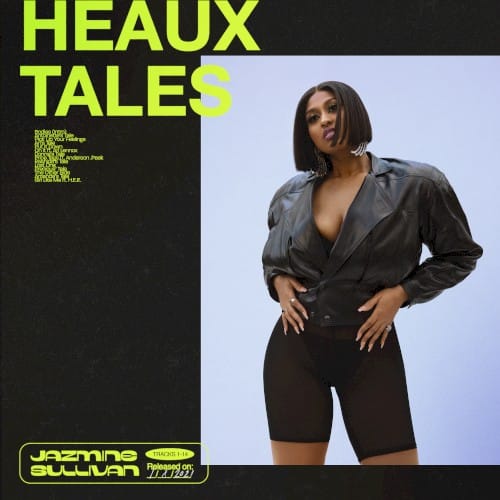
Heaux Tales is a concept album about women reclaiming desire, vulnerability, and heartbreak through unflinching R&B. Jazmine Sullivan's vocal performances are masterclasses in control and catharsis. The interludes of anonymous women telling their stories give the whole thing the weight of a shared secret. Hear it if you believe R&B can be both confessional and defiant.
I don’t know when I last heard an album that trusted its own silence as much as its sound. The interludes here aren’t filler — they’re the load-bearing walls. A woman says “I just wanna feel something.” Another one laughs and then stops laughing. Jazmine Sullivan lets those moments breathe before stepping back into the mic, and that patience is the whole trick. Heaux Tales is a record about wanting, but it’s also about what happens when you stop pretending you don’t.
The credits are a who’s-who of modern R&B’s quiet engineers. DZL produced the bulk of it — the same DZL who shaped Sullivan’s Reality Show — and you can hear his signature in the space he leaves around her voice. “Pick Up Your Feelings” is built on a drum pattern that sounds like it’s shrugging, a single piano chord hanging in the air just long enough to guilt you. The bassline doesn’t walk, it leans. John Kercy tracked the vocals at The Studio in Philadelphia during the pandemic, and you can hear the isolation in the takes — not lonely, but contained, like she’s singing into a phone she knows nobody’s answering.
The best moment? “Girl Like Me” with H.E.R., where Sullivan’s voice rises out of a sample of The Staple Singers’ “I’ll Take You There” and then refuses to go anywhere. The track is two women singing about the same man with completely different tones — one weary, one mocking — and the effect is a kind of disorienting solidarity. H.E.R.’s harmonies sit slightly behind the beat, which makes Sullivan’s lead sound like she’s pulling the whole thing uphill. Engineering trickery? Maybe. But it feels like intent.
“Put It Down” with Bryson Tiller is the curveball. Tiller’s auto-tuned croon is so over-polished it’s almost glass, but Sullivan counters with a vocal that sounds like it’s leaking somewhere. The contrast is deliberate — one person performing vulnerability, the other bleeding it. The beat is skeletal, just a kick and a synthetic clap, and the silence between them is where the story lives.
Sullivan has said the word “heaux” was meant to be reclaimed, but the album’s real work is quieter than that. It’s in the spoken word interludes — women who could be your sister, your coworker, your friend from high school — describing sex they didn’t want and love they couldn’t keep. One says “I thought if I gave him everything, he would give me everything.” The pause after that line is longer than most verses. That’s the production. That’s the mix. Chris Athens mastered the whole thing, and his touch is in the way those pauses never feel empty — just loaded.
There’s a track called “The Other Side” that ends the album on a gospel-tinged plea, and Sullivan’s voice cracks on the last note. Not a glissando, not a run. A crack. It’s the only moment on the album where she loses control, and she does it on purpose. That’s the measure of a singer who knows exactly what she’s doing. Heaux Tales doesn’t teach you anything. It just sits with you and waits for you to admit you’ve been here too.