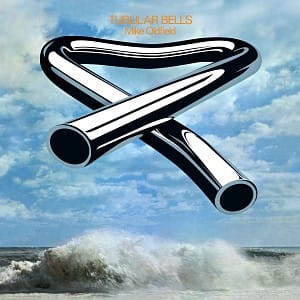
The sound of an orchestra falling down a spiral staircase. That’s what someone said about Tubular Bells once, and it’s stuck with me for years. Not because it’s accurate — it’s not — but because it points at something true: this album shouldn’t work. A teenager in his bedroom, overdubbing guitars and organs and glockenspiels until the tape turned to confetti. Forty-nine minutes of music with no vocals, no radio hook, no precedent. And yet here we are, fifty years later, still trying to explain why it holds the room.
Mike Oldfield was nineteen when he started recording Tubular Bells. He’d been a child prodigy in folk clubs, then a sideman in bands that went nowhere. By 1972, he was broke and living rent-free at The Manor, a converted farmhouse that a fledgling label called Virgin Records had just bought to use as a studio. The label’s co-founder, Richard Branson, gave Oldfield free rein and a deadline. What came back was a single piece of music split across two sides of vinyl — a suite that shifted from delicate fingerpicked guitar to crashing multitracked fury to a manic spoken-word section that feels like the narrator lost his place in the hymnal.
The recording was a marvel of frugal ambition. Oldfield played nearly everything himself — acoustic and electric guitars, bass, piano, organ, tubular bells, timpani, glockenspiel, and a dozen other things you’d find in a school music room. He layered them one at a time using an eight-track machine that had to be synchronised by hand, because there was no other way. The result has the density of a full orchestra but the warmth of a single person breathing into the mix. You can hear the tape hiss, and you don’t mind.
The album’s most famous moment — the one you know even if you’ve never owned it — is the opening of Side Two, where a master of ceremonies in a stiff English accent announces each instrument as it enters: plus tubu-lar bells. That passage became the theme for The Exorcist, which turned Oldfield into an accidental horror icon. But the music Pre-dates that film by months. What the movie borrowed was the tension that had always been there — the sense that something orderly is slowly coming apart, and that the breakdown is part of the beauty.
The man behind the machines
Oldfield never intended to be a frontman. He was a shy, lanky kid who preferred the control room to the stage. After Tubular Bells became a global phenomenon, he spent the rest of the decade trying to escape its shadow — making more ambitious, stranger albums that never quite matched the first one’s cultural weight. He eventually succeeded on his own terms, but the debut remained the thing everyone wanted to talk about. It still is.
There’s a moment near the end of Part Two where the tempo doubles and the whole piece seems to sprint for the exit. It’s pure adrenaline, a young man proving he can do anything with a tape machine and enough patience. I’ve heard people call it the greatest debut album in progressive rock, and others dismiss it as a curio. Both are true. What isn’t arguable is that Tubular Bells sounds like nothing before or since. It’s a private world, built from scratch, and you’re invited in. The door sticks a little, but that’s part of the charm.