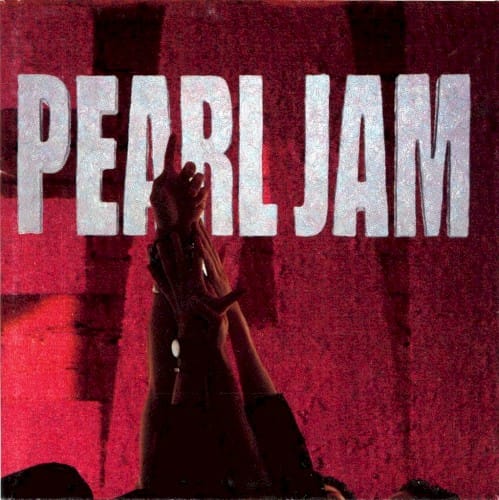
There was no flag planted, no declaration of intent. When Ten appeared in the late summer of 1991, it didn’t announce a revolution. It just arrived, heavy and bruised, like someone who had been driving all night and wasn’t quite sure where he’d ended up.
The people who made it had already lived a band’s worth of tragedy. Stone Gossard and Jeff Ament had watched Andrew Wood die, then watched their group Mother Love Bone dissolve. They weren’t kids looking to start something. They were survivors trying to build something solid from rubble. They found Eddie Vedder, a San Diego kid who had been sending cassette tapes of his voice into the dark, and they gave him a room. He came back with lyrics that read like journal entries someone had left on the floor.
The band was called Mookie Blaylock at first. Pearl Jam came later, and that name change tells you something. They weren't trying to sell you a myth. They were trying to get out of their own way.
The Voice from the Basement
Eddie Vedder’s vocals on Ten don’t sound like a singer finding his range. They sound like a man who has been shouting into a pillow for years and has finally found someone willing to listen. On Once, he snarls. On Alive, he tells a story that turns out to be about a mother who reveals that his father is actually the man who raped her, and he somehow makes that confession feel like something you’ve always known.
That song was a single. That was the song they led with. It says everything about where the band’s head was in 1991.
The production is clean in a way that grunge often wasn’t. Rick Parashar gave the guitars a polished crunch and left the vocals raw at the edges, so you could hear every crack and strain in Vedder’s throat. Mike McCready’s solos sound like they’re being played by a guy who learned to play guitar by listening to Hendrix in a basement with a single lightbulb hanging from the ceiling. He rips, but he never feels like he’s showing off.
Songs That Found Their People
Jeremy became the video everyone remembers. The classroom. The gun. The controversy. But listen to the song without the visuals and it’s a study in restraint. The verse is almost quiet enough to be a lullaby, and then the chorus hits like a door slamming. Vedder reportedly wrote it in a white-hot fury, but what landed on tape is something colder and more durable.
Black is the one that still stops you. A ballad for no radio station in particular. The lyrics are specific — “I know someday you’ll have a beautiful life, I know you’ll be a star” — but the melody is so worn-in that it feels like a standard. If you were in high school when this album came out, you knew someone who cried to Black. Maybe you were that someone.
The album isn't perfect. Deep and Why Go are the kind of songs a band writes when it hasn’t fully learned how to edit itself. But the missteps don’t matter because the peaks are so high. Release closes the record with a minute of feedback and a lyric about finding your father. It ends on a held note that sounds like a question.
Ten sold over ten million copies in the United States. It made them famous in a way that none of them could have prepared for. Vedder spent the next decade trying to hide from that fame, which makes a kind of sense. This is an album about people who are damaged, and damage doesn't go away just because you're on the cover of Time.
What remains is the sound of four musicians who had nothing to lose and one singer who had everything to say. Twenty-five years later, it still plays like a secret you shouldn't be hearing.