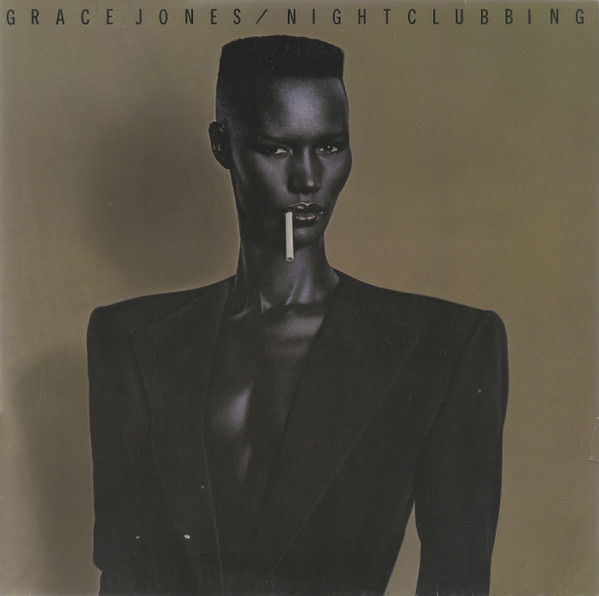
I’ve had Grace Jones’s Nightclubbing for years. I’ve listened to “Pull Up to the Bumper” and “I’ve Seen That Face Before (Libertango)” dozens of times. I never looked at the credits until last week.
The producer and engineer is Alex Sadkin. He died in a car crash in Nassau in 1987, at thirty-eight. He was a geology graduate from Florida State University who’d worked at a sea turtle farm on Grand Cayman before someone noticed he could mix a record. He became head engineer at Compass Point Studios, a recording facility in Nassau, Bahamas, built in 1977 by Chris Blackwell, the founder of Island Records.
I own records that Alex Sadkin produced or engineered. They are records I think of as belonging to completely different worlds.
The Studio
Compass Point Studios sat sixteen kilometres west of downtown Nassau, on the island of New Providence. Blackwell designed it as a self-contained creative community — a recording facility supported by in-house musicians, engineers, and producers, all dedicated to a specific sound. In 1980, he assembled a house band from Jamaican reggae foundations: Sly Dunbar on drums, Robbie Shakespeare on bass, Mikey Chung on guitar, Uziah “Sticky” Thompson on percussion, Barry Reynolds on guitar, Wally Badarou on keyboards, and Tyrone Downie, formerly of Bob Marley’s Wailers, also on keyboards. They became known as the Compass Point All Stars.
The core musicians lived together in a condominium called “Tip-Top,” at the top of a hill behind the studio. They were the rhythmic engine behind Grace Jones’s Warm Leatherette, Nightclubbing, and Living My Life. They were the same musicians who played on Joe Cocker’s Sheffield Steel. And they lived in the same building as Chris Frantz and Tina Weymouth of Talking Heads, who were there working on what would become Speaking in Tongues and starting Tom Tom Club.
The Geologist
Alex Sadkin grew up in Fort Lauderdale. He played saxophone in junior high and high school. He went to the University of Miami as a biology major, then transferred to Florida State, where he studied geology and played bass in a band with childhood friends. He graduated with a Bachelor of Science in geology in 1971.
After college, Sadkin and his drummer Jim Hendee moved to Grand Cayman Island, where they both worked at a sea turtle farm called Mariculture, Ltd., on Seven Mile Beach. They lived there for six months, scuba diving and playing reggae at local clubs. When Sadkin returned to South Florida, he began his recording career as a mastering engineer, eventually becoming a tape-op at Criteria Studios in Miami. He got his big break after impressing Neil Young with his mixing ability, and Blackwell hired him as head engineer at Compass Point.
The Catalogue
The records Sadkin touched are scattered across my shelves in ways I never connected.
He produced Grace Jones’s Nightclubbing — the album NME voted best album of the year in 1981, the one with the Jean-Paul Goude cover painting, the one that fused reggae rhythms with new wave attitude and created something that didn’t have a name yet. The Compass Point All Stars played on it: Sly Dunbar on drums, Robbie Shakespeare on bass, Mikey Chung on guitar, Wally Badarou on keyboards. Jack Emblow played accordion. Jess Roden sang backing vocals.
He mixed Talking Heads’ Speaking in Tongues — the album that gave the world “Burning Down the House.” Chris Frantz and Tina Weymouth were living at Compass Point while the album was being assembled. The Compass Point sound seeped into the sessions.
He produced Thompson Twins’ Quick Step and Side Kick (1983) and Into the Gap (1984) — the albums that turned the Thompson Twins from a post-punk art project into a synth-pop chart act. “Hold Me Now” and “Doctor! Doctor!” came from Into the Gap. I own both albums.
He produced Duran Duran’s Seven and the Ragged Tiger (1983) — the album that gave the world “The Reflex” and “Union of the Snake.” I own it.
And he produced Foreigner’s Agent Provocateur (1984) — the album with “I Want to Know What Love Is” and “Waiting for a Girl Like That.” I own that too.
The Connection
I have Grace Jones, Talking Heads, Thompson Twins, Duran Duran, and Foreigner on my shelves. I have never thought of them as connected. They are different genres, different decades, different sections of the record store.
But they share a producer. A man who studied geology, worked at a sea turtle farm, and learned reggae in the Cayman Islands before becoming the sonic architect of a studio in Nassau that somehow attracted the biggest names in rock, new wave, synth-pop, and art-pop — all at the same time, in the same building, sometimes in the same room.
Alex Sadkin died on July 23, 1987, in a car crash in Nassau. He had just finished producing Boom Crash Opera’s debut album. He was about to start working with Ziggy Marley. Duran Duran dedicated “Do You Believe in Shame?” to his memory. Joe Cocker’s Unchain My Heart is dedicated to him: “A Man who lived for music, and a good friend.”
The Compass Point All Stars lived in a condominium behind the studio. The head engineer was a geologist. The building where they all lived and worked sat on a hill in Nassau, and from that hill came some of the most unlikely records of the 1980s — records I own, records I thought I knew, connected by a man I’d never heard of until I read the fine print.
Album: Nightclubbing — Grace Jones (1981, Island) Key credits: Alex Sadkin (producer, engineer, mixed by), Chris Blackwell (producer, mixed by), Sly Dunbar (drums), Robbie Shakespeare (bass), Wally Badarou (keyboards), Mikey Chung (guitar), Barry Reynolds (guitar), Tyrone Downie (keyboards), Jean-Paul Goude (cover painting)
Sources: Wikipedia — Compass Point Studios Wikipedia — Alex Sadkin Wikipedia — Nightclubbing (Grace Jones album) Wikipedia — Back in Black