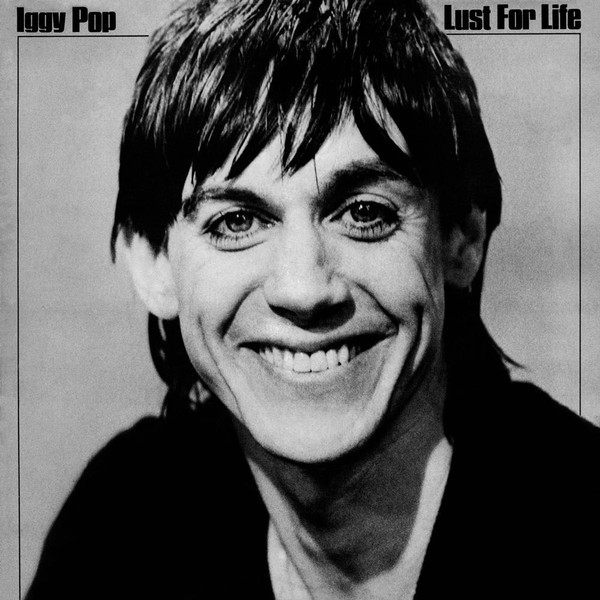
I have Iggy Pop’s Lust for Life in my collection. It’s one of those records I’ve owned so long I stopped thinking about who played on it. David Bowie produced it. Iggy Pop sang on it. It was recorded at Hansa Studios in West Berlin in the summer of 1977. The opening drum beat — that insistent, rolling, instantly recognizable pattern — is one of the most famous drum parts in rock history. It’s been in every trailer and montage since 1977.
I never looked at who played drums on it until last week.
His name is Hunt Sales. And his father was Soupy Sales.
The Clown’s Kids
Soupy Sales was a television comedian, best known for a children’s show called Lunch with Soupy Sales that ran from 1953 to 1966. He was the man who got pies in the face. That was the whole act — slapstick comedy for kids, broadcast out of Detroit and later syndicated nationally. He was a household name in American living rooms for over a decade.
His sons were Tony Fox Sales, born in 1951, and Hunt Sales, born in 1954. They grew up in Detroit. And before they were rhythm section players on some of the most influential rock records ever made, they were child performers on their father’s show.
In 1965 and 1966, Tony and Hunt appeared on Hullabaloo, the NBC music show, performing with their band Tony and the Tigers. One of those appearances was hosted by their father. They also appeared on I’ve Got a Secret with Steve Allen. Tony and the Tigers released a single called “Turn It on Girl” that was a minor hit in Detroit. They opened for The Animals at Steel Pier in Atlantic City in 1967. They were, for a brief moment, a teen band riding their father’s television fame.
Then the fame ran out. And what happened next is the part that sounds impossible.
From the TV Studio to the Recording Studio
In 1970, the Sales brothers joined Todd Rundgren in a newly formed group called Runt. They played on Runt (1970) and Runt: The Ballad of Todd Rundgren (1971), and then on Something/Anything? (1972) — one of the great power-pop albums, a record that Rundgren largely made by himself in his apartment but needed a real band for the live sections. The Sales brothers were that band.
Then, in 1975, they recorded two tracks on Kill City, an album credited to Iggy Pop and James Williamson. I own that record too — the Restored Edition. It was made while Pop was drifting through Los Angeles, post-Stooges, pre-everything. The album was produced by both Pop and Williamson, and it was largely ignored when it came out in 1977.
But it was enough to catch David Bowie’s attention. Or rather — it confirmed what Bowie already knew. He’d seen the Sales brothers play with Rundgren. He’d heard them on Kill City. When he and Pop went to Hansa Studios in Berlin to record Lust for Life, Bowie brought the Sales brothers with him. Tony on bass. Hunt on drums.
The Drum Beat
Hunt Sales played the opening drum beat on “Lust for Life.” That pattern — the one that launches the album, the one that’s been in Trainspotting and a hundred other films — was played by the son of the man who got pies thrown in his face on children’s television.
I don’t think there’s a more unlikely origin story for one of rock’s most recognizable sounds. The joke writes itself: Soupy Sales’ kid made the beat that launched a thousand movie soundtracks. But the reality is stranger than the joke. Hunt Sales wasn’t a novelty act. He was a serious musician who’d been playing professionally since he was twelve years old, who’d worked with Todd Rundgren through some of that artist’s most creative periods, and who drove the rhythm of an album that changed the sound of rock.
Tony Sales played bass on the same record. The brothers locked together with Ricky Gardiner on guitar and Bowie on keyboards, and the result was an album that sold modestly on release but became one of the most influential records of the 1970s.
The Accident
In 1979, Tony Fox Sales was in a car accident so severe that he was near death for several minutes before being revived. He was in a coma for over eight months. He eventually recovered and returned to music, but the accident derailed the brothers’ momentum at exactly the moment when their profile should have been rising.
Some of their recordings were placed in storage during Tony’s recovery. The brothers had been on a trajectory — Kill City, Lust for Life, the tour — that should have led somewhere obvious. Instead, Tony spent most of 1979 and 1980 unconscious.
When David Bowie was assembling a new band in the late 1980s, he remembered the Sales brothers from the Lust for Life sessions. He recruited them for Tin Machine, a hard-rock project that ran from 1989 to 1992. Bowie’s memories of their contribution in Berlin — ten years earlier, before the accident, before everything — were vivid enough that he wanted them back.
The Collection
I own Kill City and Lust for Life. They sit in the Iggy Pop section of my shelves, near each other but not adjacent. I bought them years apart. I never connected them through the Sales brothers. I never thought about the fact that the same two musicians — the sons of a Detroit television clown — played on both records. That the boy who drummed on his father’s show in 1966 was the man who played the beat on “Lust for Life” eleven years later.
The thing about owning records is that you think the connections end at the shelf. You think each artist is a separate story. Then you look at the credits and discover that the people making the music were connected in ways you never imagined — that a TV comedian’s kids ended up in a Berlin studio, making one of the most famous drum beats in history, because a rock star saw them play with a power-pop genius and thought: those are the guys.
Albums: Kill City — Iggy Pop & James Williamson (1977, Anagram Records) · Lust for Life — Iggy Pop (1977, RCA Victor)