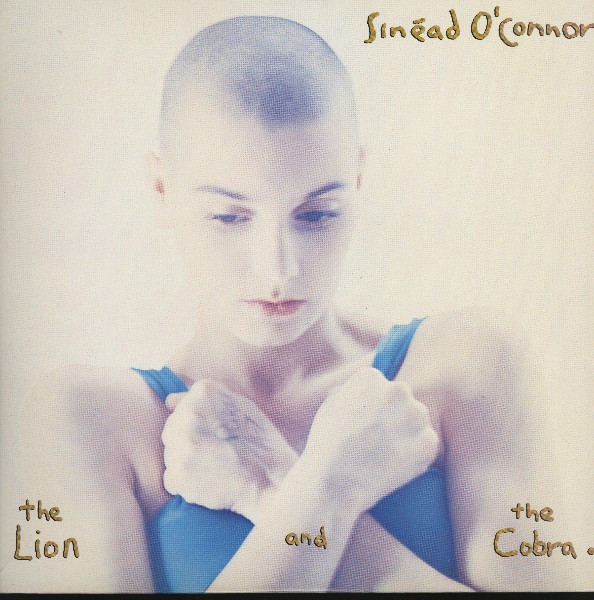
I’ve had Sinéad O’Connor’s The Lion and the Cobra for years. I’ve listened to “Troy” and “Mandinka” and “I Want Your (Hands on Me)” dozens of times. I never looked at the credits until last week.
The guitarist on “Mandinka” is Marco Pirroni. He was Adam Ant’s guitarist — the one who played on Kings of the Wild Frontier and Prince Charming. The guitarist who co-wrote “I Want Your (Hands on Me)” is Rob Dean. He was in Japan. The fiddler who co-wrote “Just Like U Said It Would B” is Steve Wickham. He plays with The Waterboys. The bassist who co-wrote “Jerusalem” is Ali McMordie. He was in Sham 69.
I own albums by all of them.
The Guitarist Who Left Before the Breakthrough
Rob Dean’s story is the one that stopped me. He joined Japan in 1975 at age twenty, playing lead guitar alongside Mick Karn’s fretless bass. He played on their first four albums: Adolescent Sex, Obscure Alternatives, Quiet Life, and Gentlemen Take Polaroids. I have all of them.
Then he left. In May 1981, after “The Art of Parties” tour, Dean walked away from Japan. His guitar work had become increasingly marginalised as the band shifted toward a more electronic sound. He was twenty-six years old.
Six months later, Japan released Tin Drum. It peaked at number 12 in the UK. “Ghosts” — an entirely electronic, synth-driven track with no guitars — reached number five on the singles chart, becoming Japan’s biggest hit. The album influenced Tears for Fears, The Cure, and XTC, all of whom hired Tin Drum’s producer Steve Nye for their own records. Dean missed all of it.
I own Tin Drum. It’s the album that made Japan famous. Rob Dean isn’t on it.
Six Years Later
In 1987, Dean resurfaced in the credits of a completely different kind of record. Sinéad O’Connor was twenty years old, recording her debut album at Oasis Studios in Camden. She was pregnant during the sessions. She produced the album herself, with Kevin Mooney.
The musicians she assembled were a strange collection. Marco Pirroni — fresh off his work with Adam Ant — played guitar on “Mandinka.” Rob Dean played guitar and co-wrote “I Want Your (Hands on Me),” the song that later appeared in A Nightmare on Elm Street 4. Enya, who was O’Connor’s childhood friend from Dublin, provided a spoken-word intro in Irish on “Never Get Old.”
What connects these people isn’t genre. It’s geography. London’s studio scene in the mid-1980s was small enough that musicians from post-punk, synth-pop, Celtic rock, and new wave all circulated through the same rooms. The network of Irish and British musicians in London at that time overlapped in ways that don’t make obvious sense from the outside.
The Waterboys Thread
Steve Wickham’s contribution is easy to miss. He’s credited as a co-writer on “Just Like U Said It Would B,” one of the album’s quieter tracks. Wickham is best known as The Waterboys’ fiddler — the musician who played on This Is the Sea and Fisherman’s Blues. He’d been playing fiddle since his teenage years in Dublin, and by the mid-1980s he was moving between London’s session world and The Waterboys’ increasingly folk-oriented recordings.
I’ve listened to Fisherman’s Blues many times. I never thought about the fact that Wickham also contributed to Sinéad O’Connor’s debut.
What the Credits Tell You
The credits on The Lion and the Cobra read like a map of London’s studio scene in 1986-87. A guitarist from a disbanded synth-pop band. A guitarist from a post-punk act. A fiddler from a Celtic rock group. A bassist from a punk band. A singer from Enya’s circle. All orbiting around a twenty-year-old Irish woman who was making her first record while six months pregnant.
I’ve owned albums by Japan, Adam and the Ants, The Waterboys, and Sham 69 for years. I never connected them to each other through this record. The connection was sitting in the liner notes the whole time.
Album: The Lion and the Cobra — Sinéad O’Connor (1987, Ensign/Chrysalis) Key credits: Rob Dean (guitar, co-writer on “I Want Your (Hands on Me)”), Marco Pirroni (guitar on “Mandinka”), Steve Wickham (co-writer on “Just Like U Said It Would B”), Ali McMordie (co-writer on “Jerusalem”), Enya (spoken word on “Never Get Old”), John Reynolds (drums), Kevin Mooney (producer)
Sources: Discogs — The Lion and the Cobra credits Wikipedia — Rob Dean Wikipedia — The Lion and the Cobra