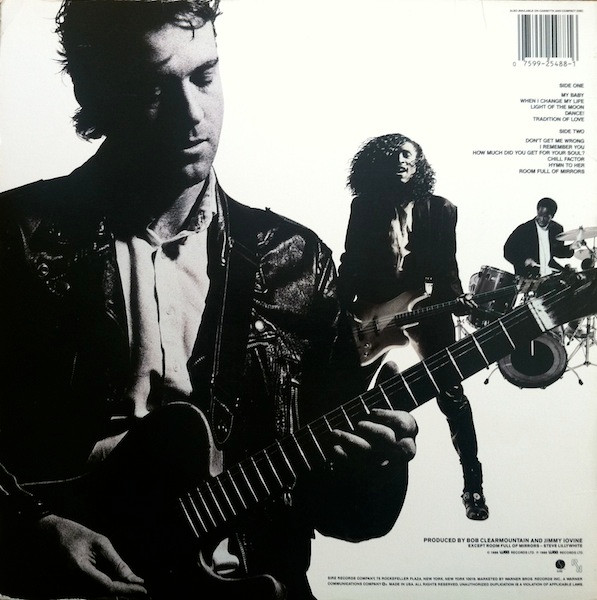
I was pulling the credits on The Pretenders’ Get Close when I noticed the producer: Steve Lillywhite. Co-produced with Bob Clearmountain and Jimmy Iovine, but Lillywhite was the main name.
Then I looked at XTC’s Drums and Wires. Also Lillywhite. U2’s Boy — Lillywhite. Peter Gabriel’s Melt album — Lillywhite. Big Country’s The Crossing — Lillywhite. Talking Heads’ Naked — Lillywhite.
These albums sound nothing alike. XTC’s angular art-pop, U2’s cavernous post-punk, Peter Gabriel’s experimental soundscapes, Big Country’s bagpipe-shaped guitar anthems, Chrissie Hynde’s pop-rock. But between 1979 and 1988, the same British producer shaped all of them. And they’re all sitting on my shelves.
Lillywhite started with XTC. Drums and Wires in 1979 was his breakthrough — the album that turned a quirky Swindon band into something that sounded urgent and alive. He followed it with Black Sea in 1980, which was darker and heavier. The engineer on that record was a young Hugh Padgham.
Padgham is the other half of this story. He engineered Black Sea for Lillywhite, then moved across the hall to engineer Peter Gabriel’s Melt album — also produced by Lillywhite. Both records came out in 1980. While working on the Gabriel sessions, Padgham stumbled onto something that would define the sound of 80s drums: gated reverb.
The story goes that during the Melt sessions, Padgham was testing a new drum sound with Gabriel. He combined a heavily reverbed snare with a noise gate that cut the reverb off abruptly. The result was a huge, explosive drum sound that vanished before it could ring out. Gabriel used it on “Intruder,” the opening track of Melt. Padgham then took the same technique to Phil Collins’ Face Value in 1981, and suddenly every pop record in the world had that gated drum sound.
Padgham didn’t just engineer — he produced The Police’s Ghost in the Machine (1981) and Synchronicity (1983). Both are in my collection. Synchronicity was The Police’s biggest album, and Padgham’s production gave it that clean, spacious sound that let Sting’s songs breathe.
So here’s the network as it sits in my record collection: Steve Lillywhite produced XTC’s first two albums, Peter Gabriel’s third album, U2’s first three albums, Big Country’s debut, Talking Heads’ final album, and The Pretenders’ fourth. Hugh Padgham engineered two of those Lillywhite productions, then went on to produce The Police’s last two albums and Phil Collins’ solo debut.
One producer and one engineer, working in overlapping sessions at the beginning of the 1980s, shaped the sound of almost every major post-punk and new wave act I own records by.
The Pretenders’ Get Close sits at a particular intersection. By 1986, Lillywhite was sharing production duties with Bob Clearmountain and Jimmy Iovine — three names that each carry their own weight. Clearmountain mixed Roxy Music’s Avalon and Springsteen’s Born in the U.S.A. Iovine went on to co-found Interscope Records. The album also featured Robbie McIntosh on guitar and Blair Cunningham on drums — McIntosh would later tour with Paul McCartney.
I’d always thought of these records as coming from different worlds. U2 and XTC and The Police and The Pretenders all sound so different from each other. But there’s a shared DNA underneath — the same set of ears shaping the sessions, the same engineering philosophy, the same cluster of studios and musicians circulating through London in the early 1980s.
One name connects them all: Steve Lillywhite. A man I’d never heard of until I looked at the back of a Pretenders record.