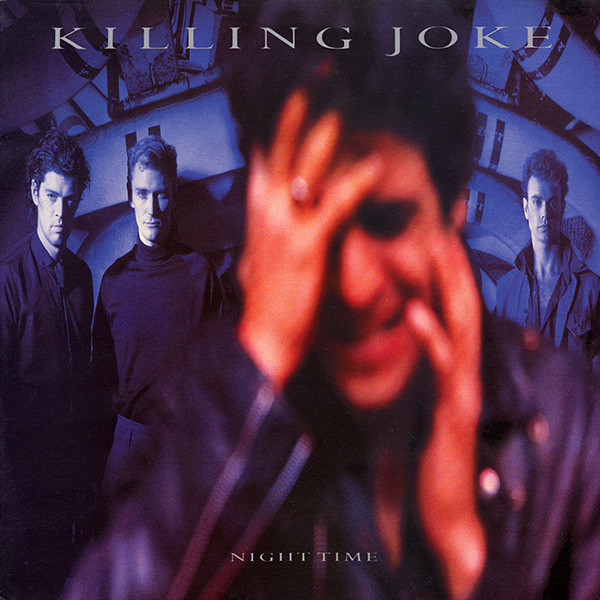
I have Killing Joke’s Night Time in my collection. I’ve had it for years. “Love Like Blood” is the track everyone knows — it was their biggest single, reached the top ten in a few countries, got them on MTV. The album sold over 60,000 copies in the UK alone. It’s the record that made Killing Joke famous.
But the track I want to talk about is the last one on the album. Track eight. “Eighties.”
I never thought much about “Eighties.” It’s a good song — Geordie Walker’s guitar riff is one of those repeating figures that burrows into your head and won’t leave. It reached number 60 on the UK chart in 1984. Not a hit, but not nothing.
Then I heard “Come as You Are” by Nirvana.
The Riff
If you’ve heard both songs, you already know what I’m going to say. The main guitar riff of “Come as You Are” — the one that opens Nevermind, the one that millions of people associate with Kurt Cobain’s whisper — is strikingly similar to the riff in “Eighties.” Similar enough that Cobain himself was nervous about it.
Danny Goldberg, who ran Gold Mountain, Nirvana’s management company, later said: “Kurt was nervous about ‘Come as You Are’ because it was too similar to a Killing Joke song but we all thought it was still the better song to go with. And, he was right, Killing Joke later did complain about it.”
The story as most people know it ends there. Killing Joke claimed plagiarism. Nirvana never acknowledged it. Kurt died in 1994 and the whole thing faded into music trivia. A footnote in liner notes. A Reddit thread every few months.
But that’s not the full story. Not even close.
The First Appearance
I also have The Damned’s Strawberries in my collection. It’s a 1982 album — two years before “Eighties” came out. Track eight on Strawberries is called “Life Goes On.” Written by Captain Sensible and Rat Scabies.
And it features what Jack Rabid of The Big Takeover described as “the exact same, extremely unique riff as both ‘Eighties’ and ‘Come as You Are’.”
Let me say that again. A punk band in 1982 was playing this riff before Killing Joke put it on their 1984 single, and nine years before Nirvana put it on the best-selling alternative rock album of all time.
I own all three records. Strawberries. Night Time. Nevermind. They sit on different shelves, in different sections, bought years apart. And the same riff — the same four or five notes in the same pattern — runs through all of them like a thread.
What Nobody Talks About
Here’s where it gets strange.
Killing Joke’s guitarist Geordie Walker told Guitarist magazine in 1994 that the band had “two separate musicologists’ reports saying it was” plagiarism. Their publisher sent a letter to Nirvana’s publisher. The response, according to Walker, was: “Boo, never heard of ya!”
Walker added: “The hysterical thing about Nirvana saying they’d never heard of us was that they’d already sent us a Christmas card!”
So Nirvana knew about Killing Joke. Had sent them a Christmas card. And still used the riff. And Killing Joke had the musicologists’ reports. And still never filed a lawsuit. Rolling Stone reported it was because of “personal and financial reasons.” Kerrang! claimed a lawsuit was filed but later dropped. The details remain murky.
But the real question nobody asks is: who did Killing Joke hear it from? Because Captain Sensible and Rat Scabies were playing it first.
Coleman and Ferguson both claimed to have no knowledge of “Life Goes On.” Whether that’s true or not, the riff was already in the water before Night Time came out. It was sitting there on a Bronze Records album, written by a punk guitarist who later had a solo hit with “Happy Talk.”
The Drummer
Nine years after “Come as You Are” came out, in 2003, something happened that nobody expected.
Dave Grohl — the drummer of Nirvana, the guy who played on “Come as You Are,” the guy who was sitting behind the kit when that allegedly plagiarized riff became one of the most recognizable guitar parts in rock history — recorded drums for Killing Joke’s second self-titled album.
He did it for free.
According to the band, the original plan was to have three drummers: Grohl, John Dolmayan from System of a Down, and Danny Carey from Tool. But when Grohl heard the songs, he said: “I want the whole thing.”
He recorded all the drums in five days, at Grand Master Studios in Los Angeles. The album was produced by Andy Gill of Gang of Four. It came out on 28 July 2003 and peaked at number 43 in the UK — Killing Joke’s highest-charting album in decades.
Nobody in the music press could quite figure out what to make of it. Grohl, a longtime Killing Joke fan, had just played drums on an album by the band his own band had been accused of ripping off. And he did it without being paid.
Foo Fighters had already covered another Killing Joke song — “Requiem” — as the B-side to “Everlong” in 1997. But playing on the full album, for free, felt like something more than fandom. It felt like a reckoning.
The Collection
I own Night Time by Killing Joke. I own Strawberries by The Damned. I own Nevermind by Nirvana. And I own the 2003 self-titled Killing Joke album — the one Grohl played on.
Four albums. Three bands. One riff. And a Christmas card.
The riff shows up on a 1982 Damned album that almost nobody remembers. Two years later, Killing Joke built a single around it and called it “Eighties.” Seven years after that, Nirvana built a career around it and called it “Come as You Are.” And nine years after that, Nirvana’s own drummer went back to the band that had been ripped off and played on their record — for free, in five days, no questions asked.
I’ve been listening to these records for decades. I never connected them. I never noticed that the bass line on track eight of Strawberries is the same one that opens Nevermind. I never thought about the fact that Dave Grohl, who played on “Come as You Are,” later played on a Killing Joke album — and that Killing Joke were the band his own band allegedly stole from.
That’s the thing about owning records. You think they’re separate. You think each one is its own story. Then you pull them off the shelf and discover they’ve been talking to each other the whole time.
Albums: Strawberries — The Damned (1982, Bronze Records) · Night Time — Killing Joke (1985, E.G. Records) · Killing Joke — Killing Joke (2003, Zuma Recordings)