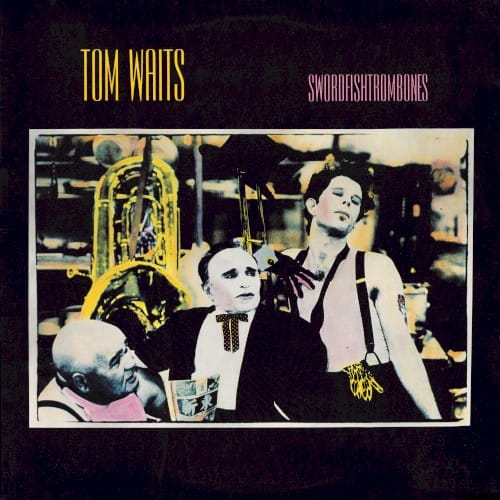
Swordfishtrombones is where Tom Waits traded his late-night piano for a junkyard percussion section and a bullhorn. It's a brutal, beautiful, clattering noise that redefined American gothic. If you think you know Waits from *Closing Time*, this album will punch you in the throat.
The man who burned his piano.
Not literally—but you can hear the smoke. Swordfishtrombones opens with a kick drum that sounds like someone punching wet concrete, a marimba that might as well be xylophone played by a ghost, and Waits himself, gargling gravel through a megaphone. Six albums in, Tom Waits decided the late-night saloon act was over. He walked away from the ivories, away from the jazzbo croon, and into a scrap yard.
The story goes that Waits had been carrying a suitcase full of train-yard sounds in his head for years. In 1982, he booked time at Sunset Sound Factory in Los Angeles—room where Van Morrison had cut Astral Weeks, a decade and a half earlier. Only Waits didn’t bring a band. He brought Victor Feldman on marimba, Larry Taylor on bass, and a collection of objects that weren’t musical instruments until he said they were.
Brake drums. Railroad spikes. A pipe bomb of a piano that had been dropped from a third-story window.
The engineer, Biff Dawes, later said he spent half the sessions just trying to figure out what was making noise. Waits didn’t care. He wanted the clang, the scrape, the sound of something falling over. On “16 Shells from a Thirty-Ought-Six,” he beats a suitcase with a stick. On “Town With No Cheer,” he growls into a bullhorn while Feldman’s vibraphone wobbles like a funhouse mirror. The title itself is a portmanteau—swordfish for the sea, trombones for the brass, but really it’s just a list of things that don’t belong together, welded into one steaming heap.
This is not a gentle record.
But it’s not chaos, either. Listen to “Shore Leave.” Underneath the clatter—the steam whistle, the cowbell, the clanking chain—there’s a waltz. Waits had always been a songwriter, even when he was playing the drunk poet. Here he buried the melodies under two inches of rust, but they’re there. “Johnsburg, Illinois” is a love letter as simple and broken as a postcard from a flood zone. He sings it straight, almost no percussion. It’s the quiet before the next explosion.
The production is dry and close. No reverb to soften the edges. You can hear the chair creak. You can hear Waits breathing between lines. On “Frank’s Wild Years,” a spoken-word piece that would later become a stage play, he narrates over a single piano chord that sounds like it was played with a hammer. The whole album sounds like it was recorded in a basement under a highway.
Critics didn’t know what to do with it. Some called it a joke. Others called it genius. Both were right. Waits had made a record that refused to sit still—it wasn’t folk, it wasn’t jazz, it wasn’t rock. It was junk, in the best sense. Found objects reassembled into something that breathed.
Thirty years later, you can draw a line from Swordfishtrombones to Nick Cave, to PJ Harvey, to the whole ugly-beautiful strain of outsider Americana. But nobody has matched the sheer joy of the clatter. Waits sounds like he’s having the time of his life, even when he’s singing about being buried alive.
Put this on loud enough to rattle the windows. Let the neighbors wonder.